How Home Warranty Companies Actually Make Money
A home warranty company is an insurance operation. Premiums must exceed claims plus overhead plus profit, which means customers collectively have to lose. A look at the unit economics and the levers that protect the pool.
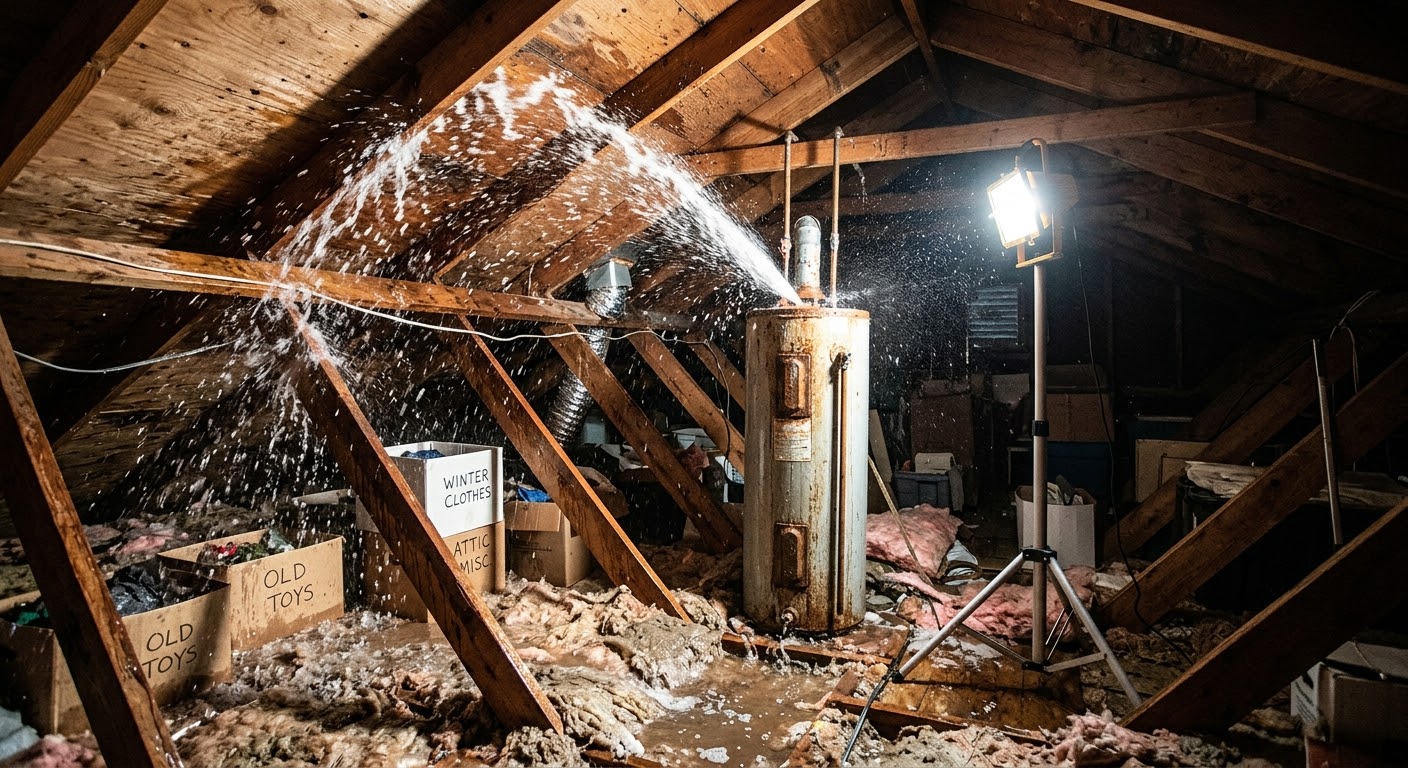
A home warranty is sold as peace of mind. Pay an annual fee, and when the air conditioner dies, someone else deals with it. It sounds like a hedge against the unpredictable cost of owning a house.
But step back and look at the business model, because once you understand how these companies make money, the product makes a lot more sense, and it becomes clear why so many customers walk away feeling like they got taken.
It is an insurance company wearing a different hat
A home warranty company is, functionally, an insurance operation. It collects premiums from a pool of customers, pays claims out of that pool, and keeps the difference after covering overhead and profit.
Which means the arithmetic is not complicated and it is not optional. Total premiums collected must exceed total claims paid plus operating costs plus profit margin. There is no version of this business where customers collectively receive more than they pay in. The pool has to run a surplus or the company folds.
So in aggregate, home warranty customers must lose money. That is not a scandal or an accusation of fraud, it is simply what the business is. Every insurance product works this way. The question worth asking is whether the specific risk being insured is one worth paying that spread for.
The levers that protect the pool
Once you see the model, every feature of a home warranty contract makes sense as a mechanism for controlling payouts.
The service call fee is a deductible, and it does more work than people realize. Charging a fee for every visit suppresses small claims entirely, since nobody files on a minor issue when the fee approaches the repair cost. It also means a single problem requiring multiple trades or repeat visits generates multiple fees, shifting real cost back to you.
Coverage caps limit the company's downside on exactly the claims that would hurt most. Your compressor fails, the replacement runs well past the cap, and you cover the remainder. The company's exposure on any single claim is bounded by contract while your exposure is not.
Exclusions are underwriting. Pre-existing conditions, improper maintenance, code violations, prior modifications, improper installation. Every one of these is a legitimate-sounding reason to reduce or deny a claim, and collectively they give the company broad discretion at exactly the moment you are relying on the coverage. You generally discover which exclusion applies to you only after something has already broken.
Contractor selection controls cost. The company chooses who comes out, which means it can direct work to providers with negotiated rates. That is efficient for them. For you, it means you are not hiring the best plumber in town, you are accepting the one assigned, on their schedule.
Repair over replace is the default posture wherever possible, because repairing a fifteen-year-old system costs far less than replacing it, even when replacement is what you actually want.
None of these are hidden. They are all in the contract. But they are the machinery that keeps the pool profitable, and they operate against you precisely when you need the product to work.
The real question: is this risk worth insuring?
Here is the sharper way to think about it, and it applies well beyond home warranties.
Insurance makes sense when you are transferring a risk you genuinely cannot absorb. Your house burning down is catastrophic and financially ruinous, so paying a premium to move that risk off your balance sheet is rational even knowing the insurer profits over time. You are not buying an investment, you are buying protection against something that would wreck you.
A home warranty covers a different category entirely: the eventual, predictable, and generally budgetable failure of appliances and systems. Water heaters fail. HVAC units wear out. These are not surprises, they are maintenance on a schedule you can estimate. And the individual costs, while unwelcome, are usually in the range a prepared homeowner can absorb from a reserve fund.
Paying an insurance spread on predictable, non-catastrophic maintenance is a much weaker proposition than paying it on a catastrophic risk. That is the core reason so many people find home warranties disappointing. The product is structurally fine. It is just insuring the wrong kind of risk for most people.
Where a warranty still makes sense
To be fair, there are real situations where one is a reasonable call.
If you have little or no cash cushion and a single major failure would genuinely put you in a bind, converting an unpredictable expense into a predictable one has real value, even at an unfavorable expected return. That is the same reason people with thin margins insure things wealthier people self-insure.
If a seller pays for one as part of your purchase, take it. It costs you nothing.
And from the seller's side, offering one is a legitimate, low-cost tool that can make a listing more attractive to a nervous buyer. Used that way it is a marketing expense, not a financial product.
The alternative
For most homeowners, the better structure is self-insuring. Take what you would have spent on premiums and service fees, put it in a dedicated reserve, and you keep full control. You choose your own contractors, you decide repair versus replace, you never argue with a claims department, and anything you do not spend stays yours.
Pair that with knowing what you actually own. Before you buy, get a real inspection and understand the age and condition of the roof, HVAC, water heater, and major systems. Managing risk with information beats managing it with a contract full of exclusions.
How we approach it
We help our buyers understand the true condition of a home's major systems before closing, so you are making decisions with clear eyes rather than buying coverage against an unknown. And when a warranty makes sense as a negotiating tool, whether you are asking a seller to provide one or offering one to attract buyers, we know how to use it in the deal.
If you are buying or selling in Montgomery County and want a straight assessment of what you are actually taking on, we are glad to help.
Call or text 713-303-5039.
The Keegan Group | Montgomery County, Texas / Residential · Commercial · Land · Investment · Property Tax Consulting.
Ready to Discuss Your Needs?
Whether you're locally upgrading, relocating to the area, or expanding your business or investment portfolio, we're here to guide you with competence and precision.
Call or Text: 713-303-5039