Paying Cash for a House in Today's Market: When It Wins, and When It Costs You
Paying cash feels like the obviously smart move. It wins on leverage and speed, but it forfeits liquidity and the inflation hedge that fixed-rate debt provides. An honest look at both sides, plus the hybrid most people miss.
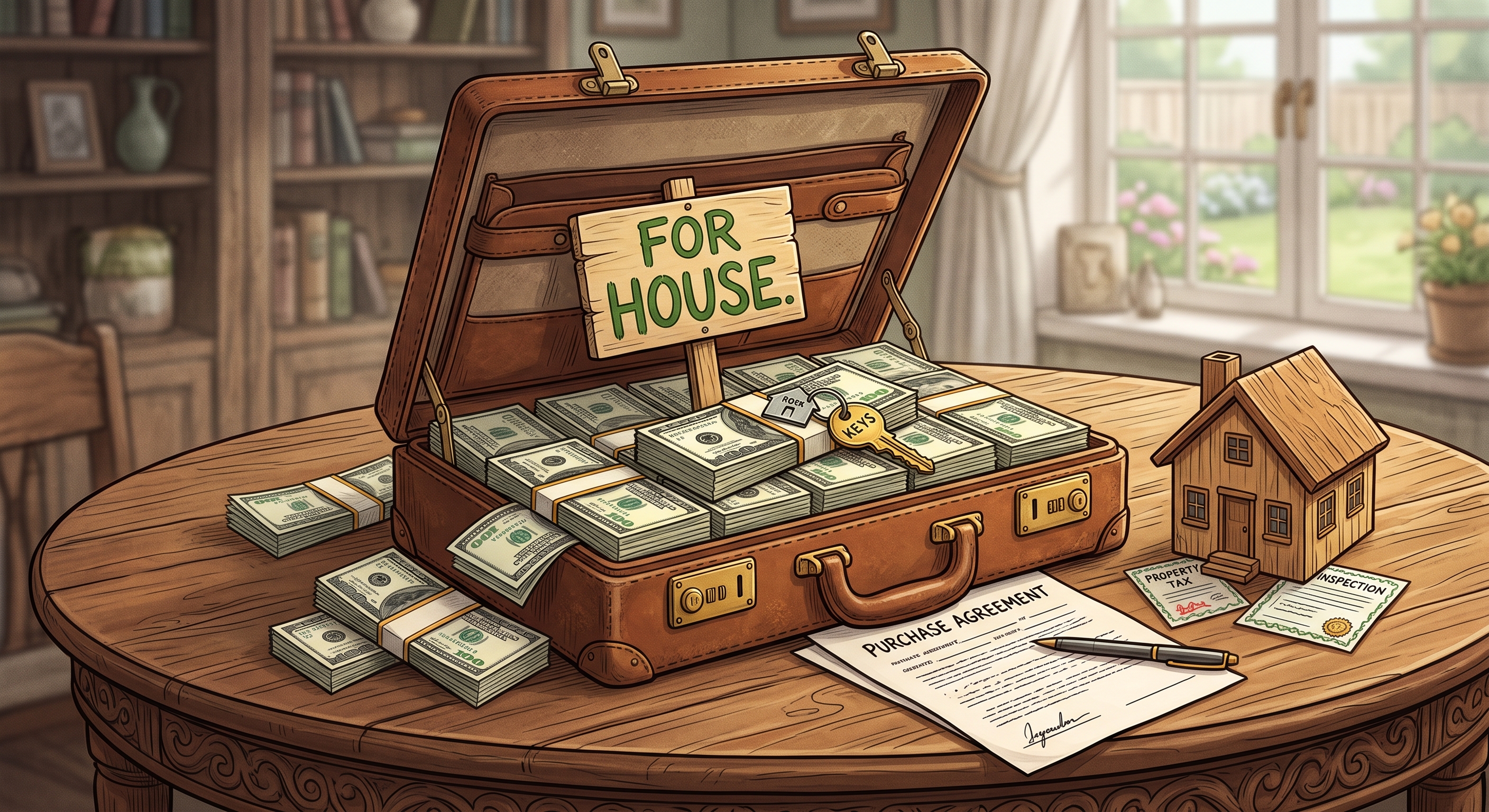
If you have the money, paying cash for a home feels like the obviously smart move. No mortgage, no interest, no bank. In a market where rates sit near 6 percent, the appeal is stronger than it has been in years.
But the obvious answer is not always the right one, and the case for financing is more interesting than most people realize. Here is an honest look at both sides.
Where cash genuinely wins
Negotiating leverage. A cash offer is a stronger offer, and sellers pay attention. No financing contingency, no appraisal requirement, no underwriting risk. In a competitive situation, cash frequently beats a higher financed offer, and that alone can be worth real money on the purchase price.
Speed. Without a lender, you close in days rather than weeks. That matters enormously on distressed and bank-owned properties, where sellers value certainty and speed, and it is a genuine edge for investors.
No payment, no risk of foreclosure. There is a real psychological and financial value to owning outright. Your carrying cost drops to taxes, insurance, and maintenance, and no lender can take the property.
Cost savings. You skip origination fees, lender title policy costs, and years of interest.
Where financing wins, and this is the part people underrate
Leverage multiplies returns. Put 20 percent down and the asset appreciates on its full value while your capital covers only a fraction. On investment property especially, that is the difference between owning one property and owning four.
Liquidity is protection. Cash sunk into a house is trapped. Home equity is famously illiquid, and getting it back out requires selling or borrowing against it, both of which take time and cost money. A large emergency, an opportunity, or a job loss is much easier to handle with reserves than with a paid-off house and an empty bank account.
Opportunity cost is real. Money used to buy a house cannot be deployed elsewhere. Whether that alternative is another property, a business, or a diversified portfolio, the question is not whether avoiding 6 percent interest is good, it is whether that capital could earn more than 6 percent somewhere else.
And the big one: inflation quietly pays your mortgage. Fixed-rate debt is repaid in nominal dollars, which means you are repaying a fixed obligation with money that gets less valuable every year. When inflation runs meaningfully, your real cost of borrowing is far below the number on your loan documents, and in a high inflation environment it can approach zero or go negative. That is a genuinely unusual financial position, and it is available to ordinary people almost nowhere else. We break that mechanic down in detail in why a fixed-rate mortgage is a bet against the dollar.
The hybrid that most people miss
You do not have to choose all the way in either direction.
Buy with cash, then finance afterward. This is the tactic sophisticated investors use constantly. You win the deal with a cash offer, close fast, and then do a delayed financing or a cash-out refinance to pull most of your capital back out. You get the negotiating advantage of cash and the leverage of debt. Note that lenders often impose seasoning requirements, so understand the timeline before you count on it.
Make a large down payment rather than an all-cash purchase. You get a smaller loan, a lower payment, and meaningful equity while keeping reserves intact.
How to actually decide
Ask yourself four questions honestly.
What would this money earn if you did not put it into the house? If the answer beats your mortgage rate on a risk-adjusted basis, financing deserves serious consideration.
How much liquidity would you have left? If buying cash leaves you without meaningful reserves, that is a bad trade regardless of the interest savings.
What is this property for? Investment property leans toward leverage, since the whole point is deploying capital efficiently. A primary residence you plan to hold for thirty years is a more personal decision.
And how do you actually feel about debt? This one is not purely mathematical, and it should not be. Some people sleep better owning outright, and that has genuine value even when the spreadsheet disagrees.
The bottom line
Cash is a powerful tool, especially for winning competitive deals and closing fast. But paying cash to avoid interest is not automatically the wealth-maximizing choice, particularly when inflation is doing quiet work on the real value of fixed-rate debt.
The strongest position is usually knowing you could pay cash, and then deciding deliberately whether to.
If you are weighing this on a specific property in Montgomery County, we will run the actual numbers with you rather than handing you a rule of thumb. We are a real estate team rather than financial advisors, so loop in your CPA or advisor on the investment side, but we will make sure you see the whole picture including what cash does to your negotiating position. Start with an active property search or a complimentary professional valuation if you are selling to fund the purchase.
Call or text 713-303-5039.
The Keegan Group | Montgomery County, Texas / Residential · Commercial · Land · Investment · Property Tax Consulting.
Ready to Discuss Your Needs?
Whether you're locally upgrading, relocating to the area, or expanding your business or investment portfolio, we're here to guide you with competence and precision.
Call or Text: 713-303-5039