Your Fixed-Rate Mortgage Is a Bet Against the Dollar, and That Is a Good Bet
Most people think of a mortgage as a burden. In an inflationary system it is mostly backwards. Your debt is fixed while the dollars repaying it shrink, and the asset behind it rises. Both forces work in your favor.

Most people think of a mortgage as a burden. You owe money, you pay interest, you would rather not. That framing is intuitive and, in an inflationary monetary system, mostly backwards.
A long-term fixed-rate mortgage is one of the most favorable financial positions available to an ordinary American, and understanding why changes how you think about whether to finance a home at all.
The mechanic: you repay in shrinking dollars
Here is the core insight. When you take a thirty-year fixed mortgage, you lock in an obligation denominated in today's dollars. The payment is fixed. The balance is fixed. Neither one adjusts for inflation.
But the dollars you use to make those payments get less valuable every year. Your income tends to rise nominally over time. Rents rise. Prices rise. Meanwhile your principal and interest payment sits exactly where it was the day you signed.
So in year one you are paying with today's dollars. In year fifteen you are paying with dollars worth substantially less. In year thirty you are retiring a debt contracted in 2026 money using 2056 money, which by any historical pattern will buy a fraction of what it does now.
Inflation is quietly paying down your mortgage for you. The lender bears that erosion. You capture it.
The real interest rate, which is the number that matters
This is where it gets concrete. The rate on your loan documents is the nominal rate. The number that actually describes your cost of borrowing is the real rate, which is roughly the nominal rate minus inflation.
Borrow at 6 percent with inflation running 3 percent and your real cost is roughly 3 percent. Borrow at 6 percent in a period where inflation runs 5 or 6 percent, and your real cost approaches zero. In genuinely high inflation environments, real rates go negative, meaning you are being paid, in purchasing power terms, to hold debt.
That is not a loophole. It is how fixed nominal obligations behave when the unit of account is shrinking. And if you believe official inflation measures understate what is actually happening to prices, and there are substantive reasons to think so, then your true real rate is lower still than the published calculation suggests.
Now add the other side of the trade
The mortgage is only half of it. You are not just holding debt, you are holding debt against a hard asset.
So two things happen simultaneously. Inflation erodes the real value of what you owe, and inflation lifts the nominal value of what you own. Your liability shrinks in real terms while your asset appreciates in nominal terms. Both forces work in your favor, from opposite directions, at the same time.
There is almost nowhere else in ordinary financial life where you get to be positioned like this. Nobody lends a regular family several hundred thousand dollars at a fixed rate for thirty years, with no margin call, to buy stocks.
What this means for the cash-versus-financing question
This reframes a decision a lot of people get wrong.
Paying cash for a house avoids interest, which feels prudent. But it also forfeits the inflation hedge that fixed-rate debt provides, and it converts liquid capital into an illiquid asset. If your real cost of borrowing is genuinely low once inflation is accounted for, then cheap long-term debt is not a burden to eliminate, it is an asset to hold.
The counterargument deserves a fair hearing. This logic depends on inflation actually continuing, and on your income and the asset value rising with it. If inflation fell to zero and stayed there, a 6 percent nominal rate is a real 6 percent cost, and that is expensive. If you lose the income that services the debt, none of the theory helps you. And leverage that works beautifully in a rising market amplifies losses in a falling one.
So this is not an argument for maximum leverage. It is an argument for understanding what a fixed-rate mortgage actually is before you rush to eliminate one.
The practical takeaways
Think hard before paying off a low-rate mortgage early. If you are sitting on a 3 percent loan in a 3 percent inflation world, that debt is costing you roughly nothing in real terms. Aggressively paying it off means retiring your cheapest possible capital.
The rate is refinanceable, the price is not. In any environment, negotiating the purchase price harder matters more than the rate, because the rate can change later and the price cannot.
Fixed matters. Everything above depends on the rate being fixed. An adjustable rate hands the inflation risk back to you, which is the opposite of the position you want.
We are a real estate team rather than lenders or financial advisors, so your specific loan decisions belong with qualified professionals. What we can do is help you buy the right property at the right price, which is what makes the whole structure work in the first place.
If you want to talk through what this means for a purchase in Montgomery County, we are glad to run the numbers with you.
Call or text 713-303-5039.
The Keegan Group | Montgomery County, Texas / Residential · Commercial · Land · Investment · Property Tax Consulting.
More in Economic
2026-09-01
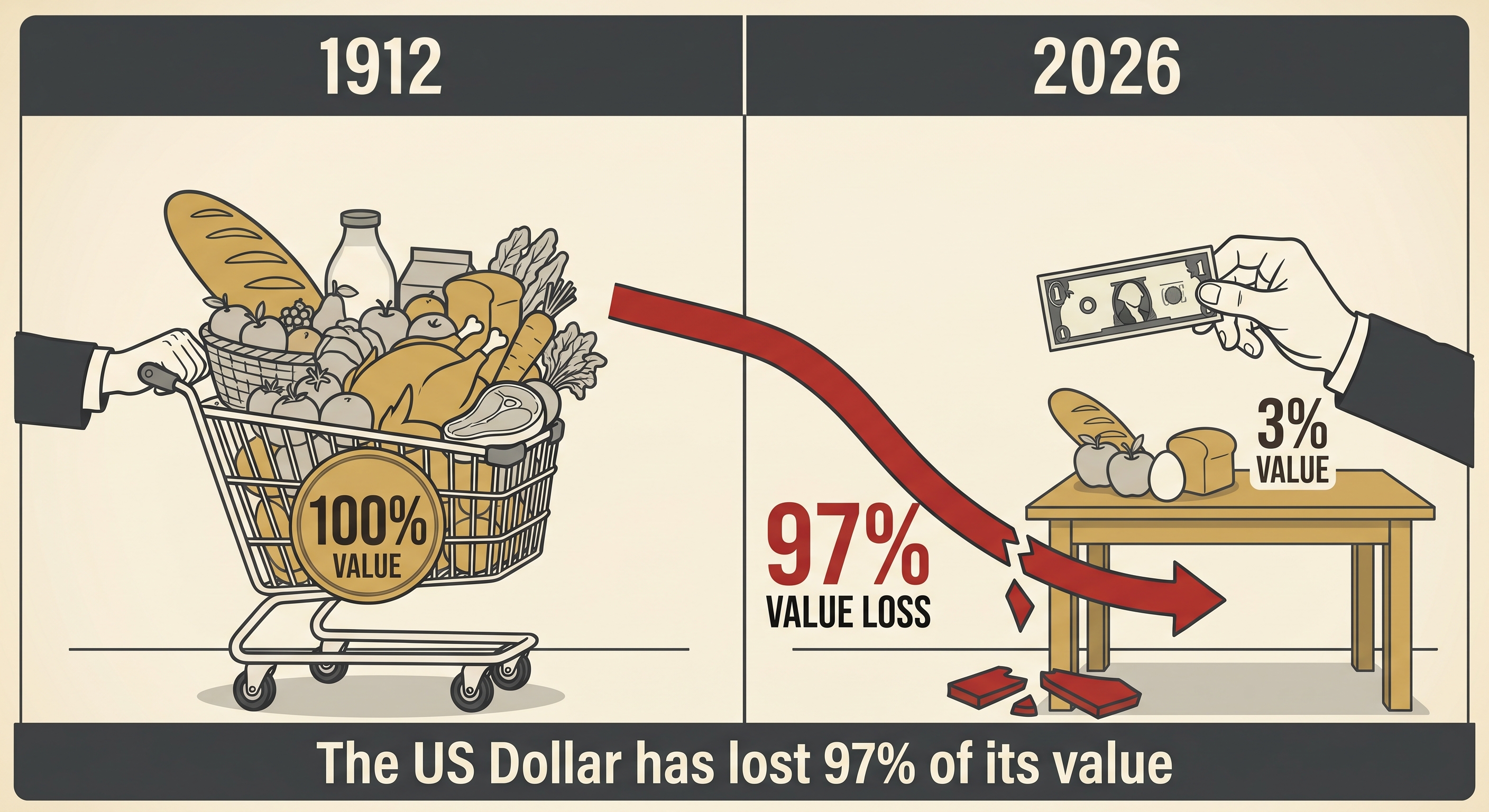
The Dollar Has Lost 97% of Its Value Since 1913. Here Is the Record.
CPI stood at 9.9 in 1913 and sits above 320 today. A 1913 dollar buys about three cents of what it bought then. The record, the 1971 hinge, and why 2 percent is a policy rather than an accident.
2026-09-01
Why Prices Are Not Going Back: The Case for Long-Term Real Estate Appreciation
People are waiting for prices to come back down. We think that wait is permanent, and the reason has less to do with housing than with money. The house did not change 2.7 times. The yardstick got shorter.
2026-09-01
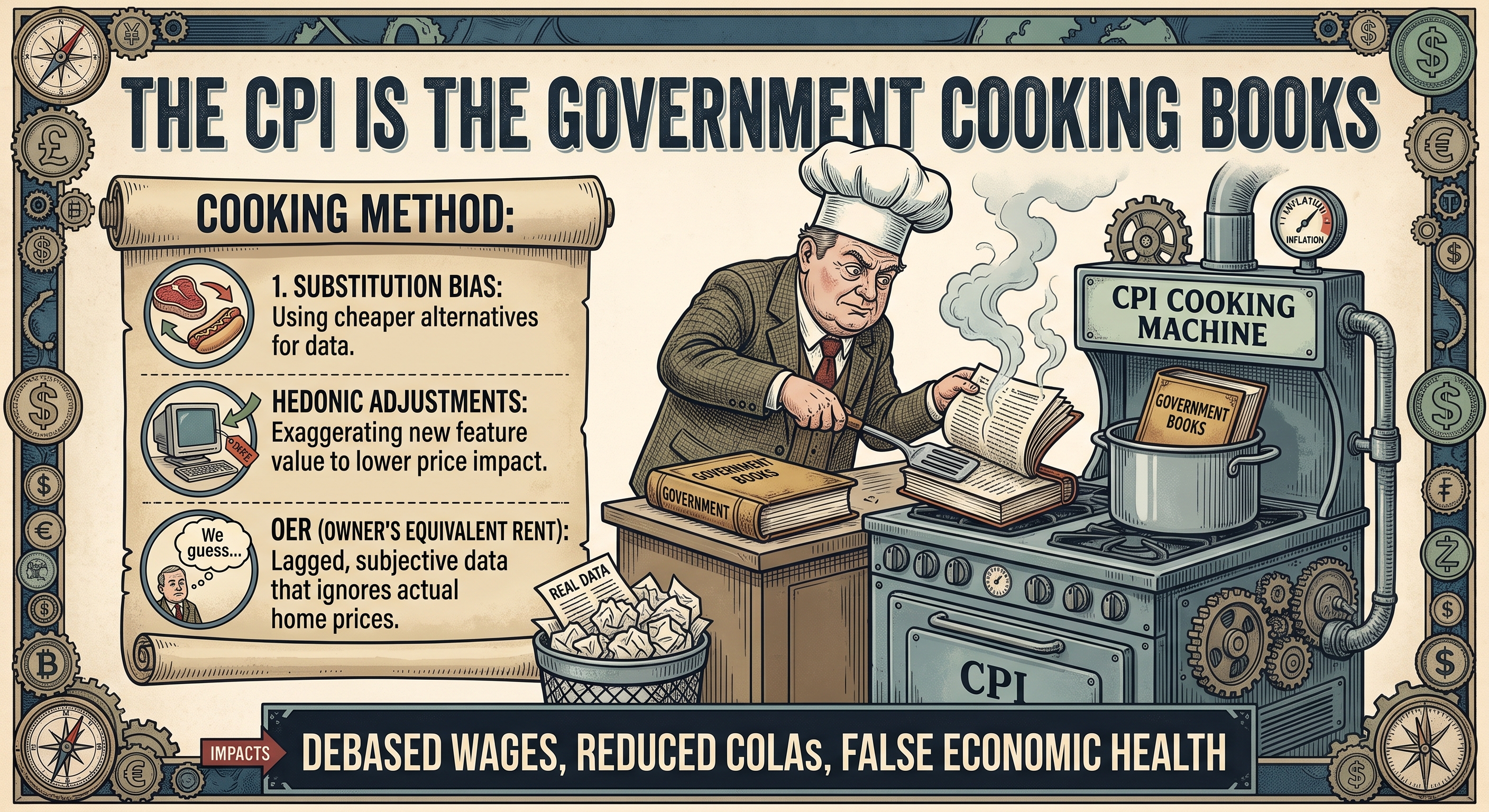
Why Official Inflation Feels Wrong: What the CPI Actually Measures
The gap between reported inflation and what you feel is not imagination. CPI is a constructed model with specific assumptions, and every methodology revision since the 1980s pushed the number the same direction.
Ready to Discuss Your Needs?
Whether you're locally upgrading, relocating to the area, or expanding your business or investment portfolio, we're here to guide you with competence and precision.
Call or Text: 713-303-5039