Whole-Home Generators in Texas: The Honest Math on Cost, Value, and Resale
What standby generators actually cost, why the Texas grid and our tree cover make them worth considering, and the honest answer on resale: buyers value them, appraisers give limited credit.
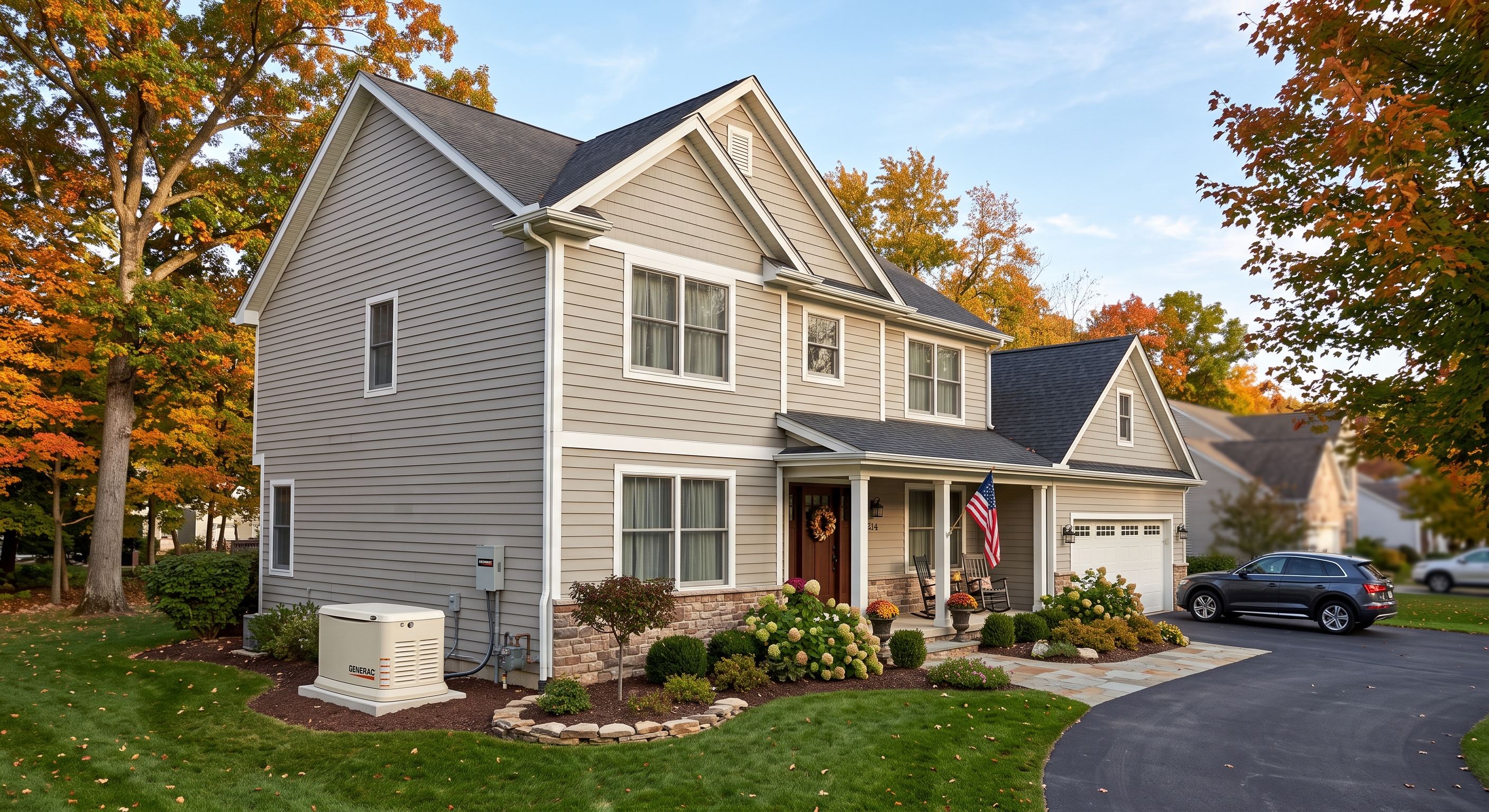
Ask ten Texas homeowners about whole-home generators and you will get ten confident opinions, most of them based on whatever happened at their own house the last time the power went out. Here is a more useful framework: what these systems actually cost, what they actually do, and what they actually do to your home's value.
What a whole-home generator is
A standby generator is a permanently installed unit, typically sitting on a concrete pad outside the house, wired into your electrical system through an automatic transfer switch.
When utility power fails, the transfer switch detects it, isolates your house from the grid, and starts the generator automatically, usually within seconds. When utility power returns, it switches back and shuts the generator down. You do not have to be home, and you do not have to do anything.
That automatic operation is the entire difference between a standby system and a portable generator. It is also most of the cost.
Fuel is typically natural gas where a line is available, or propane from an on-site tank. Natural gas means effectively unlimited runtime as long as the gas line is working. Propane means you are limited by tank capacity, which matters for planning.
Why Texans think about this more than most
Two reasons, and neither is about any single event.
First, the Texas grid operates as its own interconnection, largely separate from the rest of the country, which limits the ability to import power from neighboring regions during a serious shortfall. That is a structural feature, not a temporary condition.
Second, our weather runs both directions. Summer heat drives enormous cooling demand precisely when the grid is most stressed. Winter cold snaps do the same in reverse. Add thunderstorms, hail, and hurricane season taking down distribution lines, and outages here are a normal part of the calendar rather than a rare event.
In Montgomery County specifically, heavy tree cover is a genuine factor. The same pines that make The Woodlands, Conroe, and Magnolia beautiful also come down on power lines in high wind. Localized outages here are common even when the broader grid is fine.
What it costs
Pricing varies substantially by size, fuel, site conditions, and electrical work required, so treat any single number skeptically. But the structure of the cost is consistent.
You are paying for the unit itself, the transfer switch, the concrete pad, the electrical work to tie into your panel, the gas line or propane tank and its connection, and permitting. In many cases the installation labor and infrastructure approach or exceed the cost of the generator itself.
Sizing drives a lot of it. A unit sized to run your entire house, including central air conditioning, costs considerably more than one sized to run essential circuits: refrigerator, some lighting, internet, a well pump, and perhaps one air conditioning zone.
Be honest with yourself about which you actually need. Many homeowners who thought they wanted whole-house coverage find that essential-circuit coverage delivers most of the practical benefit at a meaningfully lower cost.
The ongoing costs people forget
A standby generator is a machine with an engine, and it requires maintenance.
It performs a self-test regularly, typically weekly, which consumes a small amount of fuel. It needs periodic oil changes, filter changes, and battery replacement, generally on an annual service schedule. Most owners carry a maintenance contract.
Skipping maintenance is how people discover, during an actual outage, that the system does not start. A generator that has not been serviced is an expensive lawn ornament.
If you run propane, factor in tank rental or purchase and refills.
What it does to your home's value
Here is the honest answer, and it is more nuanced than either side of this argument usually admits.
Appraisers typically give limited credit. A generator is not a bedroom or a bathroom. Comparable sales rarely isolate it cleanly, and appraised value adjustments tend to be modest relative to installation cost. Do not expect to recover your investment dollar for dollar on paper.
Buyers genuinely value it. In our market, a properly installed and maintained whole-home generator is a real selling feature. It differentiates your listing, it appeals strongly to certain buyers, particularly retirees, families with medical equipment needs, and people who work from home, and it can be the tiebreaker between two similar properties.
Condition and documentation matter enormously. A well-maintained unit with service records reads as an asset. A neglected unit of unknown condition reads as a future repair bill, and a buyer's inspector will note it either way.
So the honest framing is this: a generator is a lifestyle purchase that happens to have a modest positive effect on marketability, rather than a renovation that returns its cost. Buy it because you want the power to stay on, not because you expect it to pay for itself at closing.
The alternatives worth considering
A portable generator with an interlock kit. Far cheaper, and with a properly installed interlock at your panel you can safely power selected circuits. The tradeoffs are that you have to be home, you have to start it manually, you have to store fuel, and it runs loud.
Battery backup systems. Increasingly common, quiet, no fuel storage, and pair naturally with solar. The limitation is runtime. Batteries handle a few hours to a day depending on load and capacity, which covers most outages but not a multi-day event.
Nothing at all. A legitimate choice for many households. If your outages are typically short and you have no critical medical or work dependency on power, the money may genuinely be better spent elsewhere.
If you are buying a home that has one
Do your homework rather than treating it as a bonus feature.
Ask the age of the unit and its expected remaining life. Ask for service records, because a maintenance history is the difference between an asset and a liability. Confirm it was permitted and installed by a licensed electrician, since improper installation is both dangerous and a code problem. Find out what it is actually sized to run, because "whole-home" in a listing sometimes means essential circuits. Note the fuel source and, if propane, whether the tank conveys or is leased. And have it tested during your option period rather than assuming it works.
If you are selling with one
Make it count. Have it serviced before listing, gather your documentation, and make sure the listing describes accurately what it powers. Vague claims invite buyer skepticism and inspector scrutiny. A specific, documented, recently serviced system is what actually moves a buyer.
That kind of detail is exactly what we help sellers get right across The Woodlands, Conroe, Magnolia, Spring, Montgomery, and Willis, and what we help buyers evaluate honestly before they close. If you want a straight read on which of your home's features actually move your number, start with a complimentary professional valuation.
Call or text 713-303-5039.
The Keegan Group | Montgomery County, Texas / Residential · Commercial · Land · Investment · Property Tax Consulting.
More in General Real Estate

2026-09-25
Texas Homestead Protection: Why Your Home Is Shielded From Creditors
Most Texans know the homestead exemption as a tax break. Far fewer know it also shields your home from creditors, with no dollar cap at all. What it covers, the acreage limits, and the exceptions that matter.
2026-09-01
The Fall Home Maintenance Checklist for Montgomery County Homeowners
Fall is the best maintenance season Texas gives us. The foundation watering, drainage, HVAC, freeze prep, and safety items that protect your largest asset and keep problems out of a future inspection report.

2026-08-19
Pools in Texas: The Honest Math on Building One and Selling With One
Build a pool because you want to swim, not because it will pay for itself. The real ongoing costs, where a pool actually helps in the Texas market, and why condition matters more than existence when you sell.
Ready to Discuss Your Needs?
Whether you're locally upgrading, relocating to the area, or expanding your business or investment portfolio, we're here to guide you with competence and precision.
Call or Text: 713-303-5039