Why We Build Our Own CMAs Instead of Relying on Automated Ones
Most CMAs are generated in minutes from a radius and an average. The six things automated comps systematically miss, and how we actually build a valuation you can defend at the negotiating table.
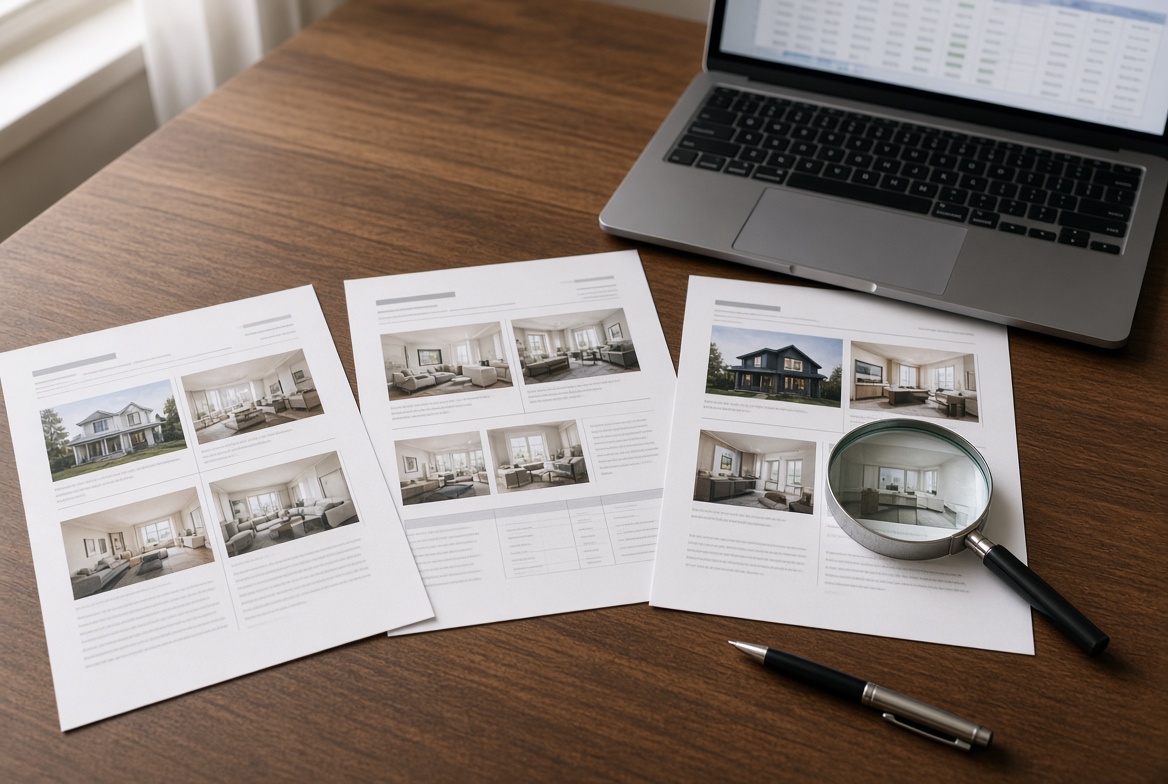
Every seller eventually receives a comparative market analysis. Most of the time it is a report generated in a few minutes: a list of nearby sales, an average price per square foot, a suggested range, and a lot of confidence built on very little analysis.
We do not price homes that way, and the reason is not stylistic. Automated comps are built for speed and scale, and the things they systematically miss are exactly the things that move your price.
What an automated comp actually does
An automated comparison typically draws a radius around your address, pulls recent closed sales that roughly match on bedrooms, bathrooms, and square footage, and averages them. Some apply simple adjustments. Most produce a price per square foot and multiply it by your home's size.
That is a reasonable starting point. It is a terrible ending point.
The six things automated comps miss
Micro-market boundaries. A radius does not know that the street on one side of a major road feeds into a different school, sits in a different MUD, or belongs to a different community with a different price structure. In this part of Texas, two homes a mile apart can be in genuinely different markets.
Condition. Two homes with identical square footage, one with an original 2004 kitchen and one fully renovated last year, will show up as equivalent comps. Buyers do not treat them as equivalent, and neither should your price.
Concessions hidden inside the sale price. A home that closed at $500,000 with $15,000 in seller-paid closing costs or a rate buydown did not really sell for $500,000. The recorded price overstates the net, and an automated comp takes it at face value.
Lot and position. Backing to a greenbelt or preserve, a corner lot, a busy street, a cul-de-sac, a power line easement, a lake view. These swing value meaningfully, and none of them appear in a bedroom count.
Timing. A sale that closed eight months ago in a different rate environment is not the same evidence as one that closed last month. Markets move, and old comps need to be adjusted or discounted rather than averaged in as if nothing changed.
What is not selling. This is the one almost every automated report ignores. Active listings tell you your competition. Pending sales tell you where buyers are committing right now. And expired and withdrawn listings tell you exactly where the market refused to go. A home priced where five others failed to sell is not priced at market, it is priced at a known ceiling.
How we actually build one
Our process starts with defining the true market for your home, which is usually narrower and more specific than a radius. We pull closed sales within that market, then go beyond the numbers: photos, listing histories, days on market, price changes, and where possible the concessions that came off the top.
Then we adjust deliberately, for condition, updates, lot position, layout, and timing, and we weigh the evidence rather than averaging it. A highly comparable sale from last month counts more than a loosely comparable one from last spring.
We layer in the active, pending, and expired picture to understand where your listing will actually compete and where buyers have already said no. And we pay attention to the carrying cost buyers will face, because two similar homes with very different MUD or tax rates do not compete on equal footing for a payment-conscious buyer.
The result is not a single magic number. It is a defensible range with a clear rationale, which is what you need to price confidently and to hold your position when an offer comes in.
Why this matters at the negotiating table
A price built on a real analysis is a price you can defend. When a buyer's agent pushes back, or an appraisal comes in, the work behind the number is what lets you hold firm or adjust intelligently instead of guessing.
Before real estate, we built a company that negotiated with Fortune 500 clients like Huntsman, Owens Corning, and Baker Hughes. The lesson from that world applies directly here: the side with better information usually wins the negotiation, and pricing is the first negotiation of every sale.
The cost of getting it wrong
Overprice from a weak analysis and your home goes stale, accumulates days on market, and usually sells for less after reductions than it would have at the right price on day one. Underprice and you leave money on the table that you will never see. Either mistake costs far more than the time it takes to do the analysis properly.
If you own in The Woodlands, Conroe, Magnolia, Spring, Montgomery, or anywhere in the county and want to know what your home is genuinely worth, start with a complimentary professional valuation built the way we describe here rather than generated in a few minutes.
Call or text 713-303-5039.
The Keegan Group | Montgomery County, Texas / Residential · Commercial · Land · Investment · Property Tax Consulting.
More in General Real Estate

2026-10-23
Buying in The Woodlands From Overseas: A Guide for International Buyers
Buying in The Woodlands from another country is very doable, but a 2025 Texas law changed the landscape. SB 17, foreign national financing, remote closings, wire fraud, FIRPTA, and owning from abroad.
2026-10-23
Selling Over the Holidays: Why the Serious Buyers Are Still Looking
Most sellers pull their homes between Thanksgiving and New Year's, which is exactly why the holidays can work. Fewer listings, motivated buyers, the January relocation wave, and how to sell well this season.

2026-10-15
Termites and the WDI Report: What Texas Buyers Should Expect
A general home inspection is not a termite inspection. What the WDI report covers, why Formosan termites make it matter more in Southeast Texas, and how to handle findings during your option period.
Let's Talk It Through
Whether you are moving up the street, relocating to the area, or expanding your business or investment portfolio, we are glad to help you think it through.
Call or Text: 713-303-5039