The Dollar Has Lost 97% of Its Value Since 1913. Here Is the Record.
CPI stood at 9.9 in 1913 and sits above 320 today. A 1913 dollar buys about three cents of what it bought then. The record, the 1971 hinge, and why 2 percent is a policy rather than an accident.
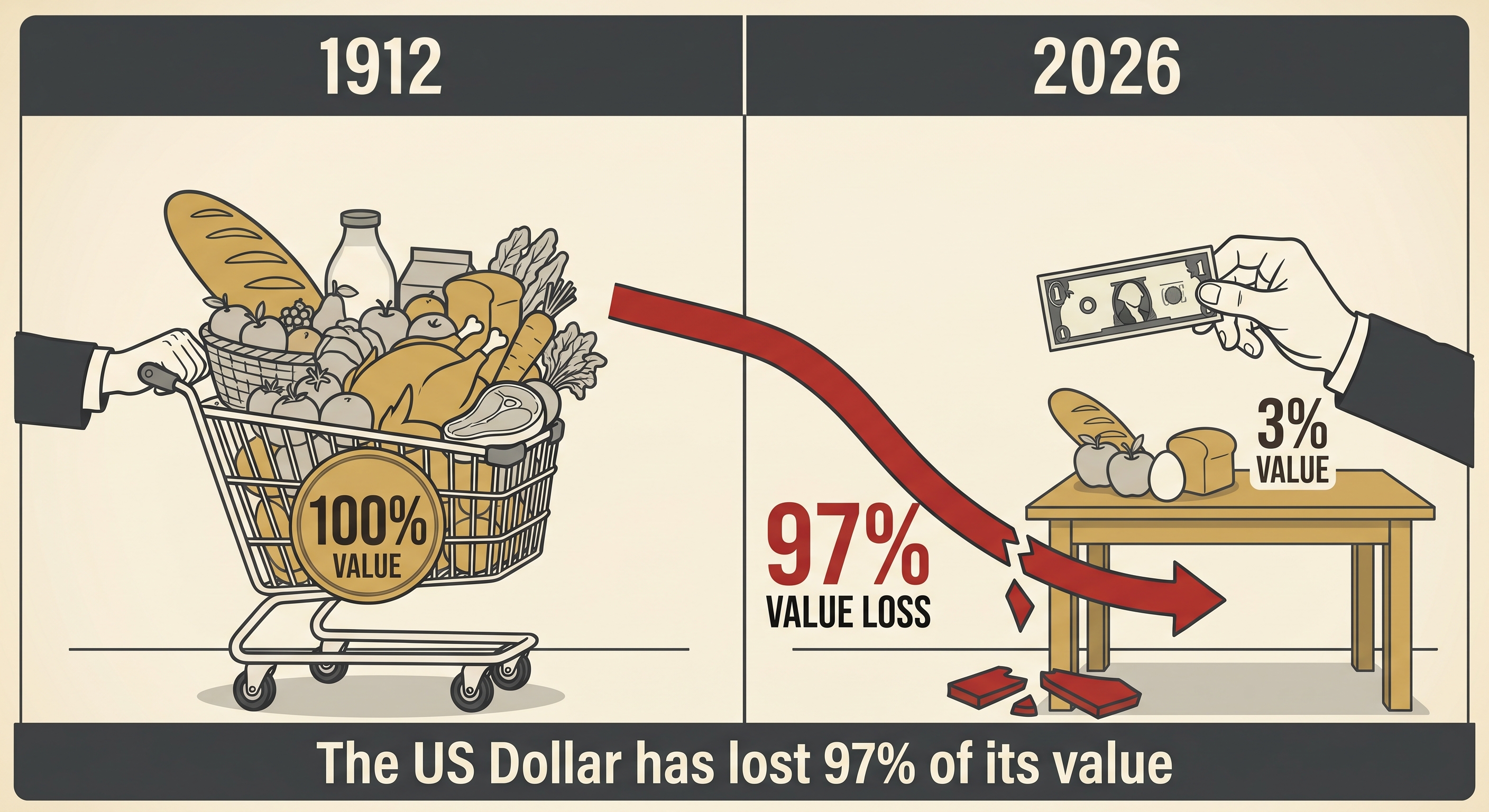
In 1913, Congress created the Federal Reserve. That same year, the government began keeping the Consumer Price Index. Those two series make it possible to answer a simple question with the government's own data: what has happened to the dollar since the institution charged with protecting it was established?
The answer is stark. Here is the record.
The number
The Consumer Price Index stood at 9.9 in 1913. Today it sits above 320. That means a dollar from 1913 buys roughly three cents' worth of what it bought then, a loss of about 97 percent of its purchasing power. Put the other way, you would need somewhere around $32 today to match what a single dollar commanded in 1913.
Cumulative inflation over the period runs on the order of 3,200 percent.
And here is the part worth sitting with: that calculation uses the government's own CPI. If you find the methodological critiques of CPI persuasive, and there are substantive reasons to, then the true erosion is worse than 97 percent.
The shape of the decline
The loss was not smooth, and the timeline tells you a lot about what causes it.
The war periods. The steepest early losses came during World War I and again during World War II, when the government financed enormous deficits and the Federal Reserve absorbed the resulting debt. Wartime money creation destroyed purchasing power even while citizens were being urged to buy bonds.
1971, the hinge. For most of the dollar's history through 1971, the currency was linked to gold at a fixed rate, which constrained how much the money supply could expand. In August 1971, President Nixon suspended convertibility, and the last structural limit on money creation came off.
What followed was among the fastest purchasing-power destruction in the record. The index climbed from 40.5 in 1971 to 82.4 by 1980, doubling in under a decade as oil shocks, deficits, and accommodative policy compounded on each other.
The Volcker interruption. By 1981, the Federal Reserve under Paul Volcker had broken the cycle by pushing interest rates toward 20 percent, the most aggressive defense of purchasing power the institution has ever mounted. It worked, at the cost of back-to-back recessions.
And then the steady grind. The dollar's purchasing power has fallen in every single year since 1972 without exception. Not most years. Every year. Prices roughly quadrupled again between 1980 and today.
Two percent is a policy, not an accident
Worth being precise here, because this is where people get confused about intent.
The Federal Reserve targets 2 percent inflation. That is stated policy, publicly and deliberately. The institution is not trying to hold the dollar's value constant and repeatedly missing. It is aiming for a currency that loses value at a controlled rate.
At 2 percent annually, a currency loses roughly half its purchasing power every thirty-five years. That is the design, working as intended. Whatever you think of the rationale, understanding that the target is deliberate erosion rather than stability changes how you plan around it.
It is also worth noting the Fed's preferred measure is not CPI at all but the PCE index, which typically runs a couple tenths of a percentage point lower than CPI because it accounts for consumer substitution more aggressively. The 2 percent target refers to the lower of the two measures.
What a century of this does to a saver
Run the math on someone who did exactly what they were told.
A person who saved diligently in dollars, and held them in cash, has watched that money lose ground every year. Not through any mistake of their own. Not through bad investment choices. Simply by holding the currency their government issues.
That is the quiet tax nobody votes on. It transfers purchasing power from savers and toward debtors, and the largest debtor in the world is the entity issuing the currency.
What it means for property
This is the part that connects to real estate, and it is straightforward.
If the unit of measurement shrinks reliably over time, then anything priced in that unit rises over time, and hard assets do this most visibly. Land, homes, and real property are finite and cannot be created with a keystroke, so as the supply of dollars expands against a limited supply of real things, the dollar price of those things climbs.
That is the deep reason property values in nominal terms have risen for a century and the fundamental reason we do not expect to see prices from a decade ago again in nominal dollars.
And there is a second implication that favors ordinary people. If you hold a fixed-rate mortgage, you are on the other side of this. Your debt is fixed in a currency that loses value, so inflation quietly erodes what you owe while lifting what you own. In a debasing currency, being a fixed-rate debtor against a hard asset is a genuinely advantageous place to stand.
The honest framing
We are a real estate team rather than economists or financial advisors, and this is history plus a framework, not a forecast or investment advice. Reasonable people disagree about whether moderate inflation is beneficial policy or destructive, and that argument is worth having on its own terms.
What is not in dispute is the record. The numbers above come from the government's own data series. The dollar has lost roughly 97 percent of its value since the Federal Reserve was created, and it has declined in every year since 1972.
Anyone making long-term decisions about savings, debt, and property ownership deserves to be planning with that fact in view.
If you want to talk about positioning in real assets in Montgomery County, whether that means buying, holding, or repositioning equity you already have, we are glad to have that conversation with real numbers. Start with a complimentary professional valuation or an active property search.
Call or text 713-303-5039.
The Keegan Group | Montgomery County, Texas / Residential · Commercial · Land · Investment · Property Tax Consulting.
More in Economic
2026-09-01
Why Prices Are Not Going Back: The Case for Long-Term Real Estate Appreciation
People are waiting for prices to come back down. We think that wait is permanent, and the reason has less to do with housing than with money. The house did not change 2.7 times. The yardstick got shorter.
2026-09-01
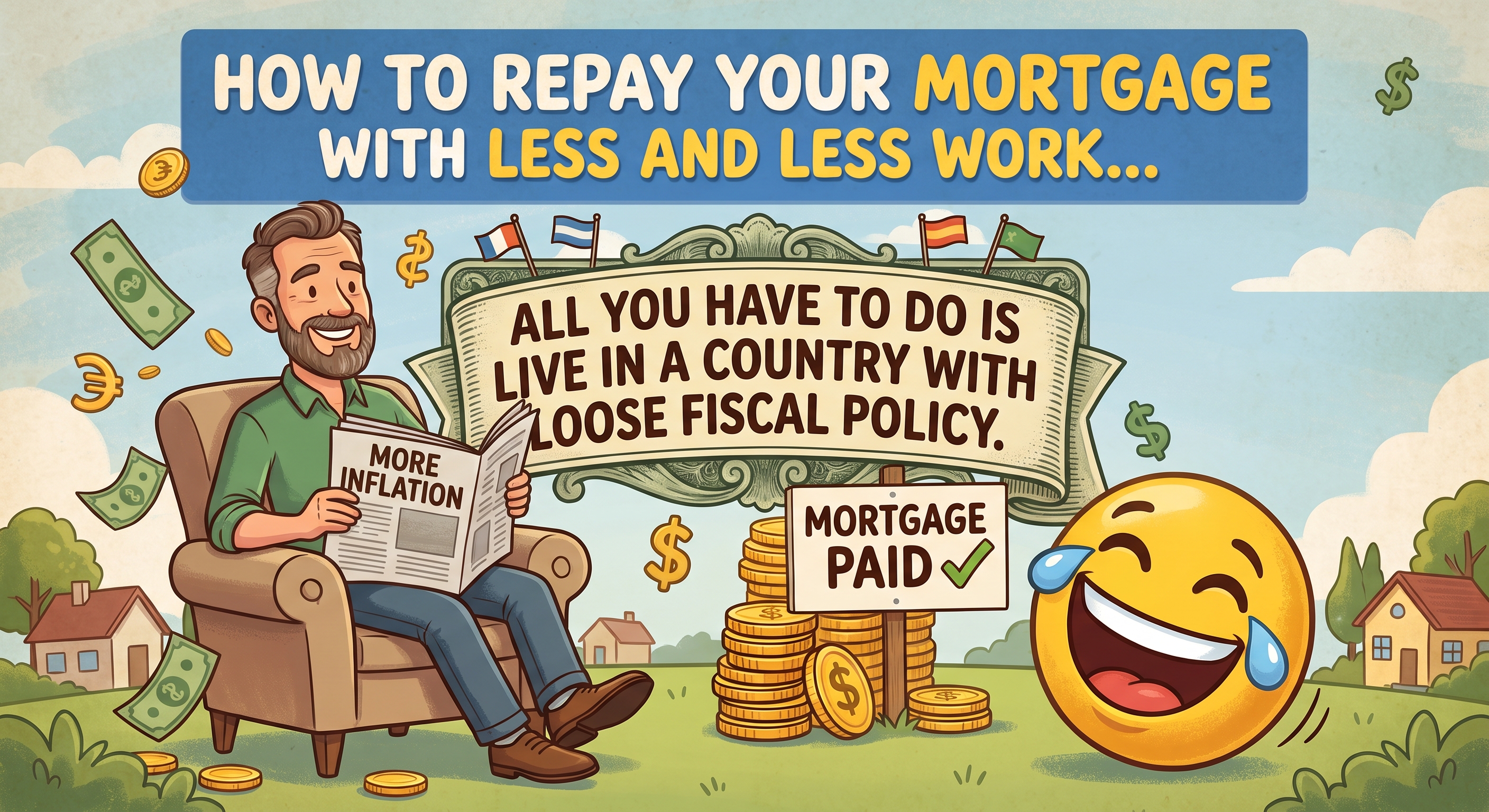
Your Fixed-Rate Mortgage Is a Bet Against the Dollar, and That Is a Good Bet
Most people think of a mortgage as a burden. In an inflationary system it is mostly backwards. Your debt is fixed while the dollars repaying it shrink, and the asset behind it rises. Both forces work in your favor.
2026-09-01
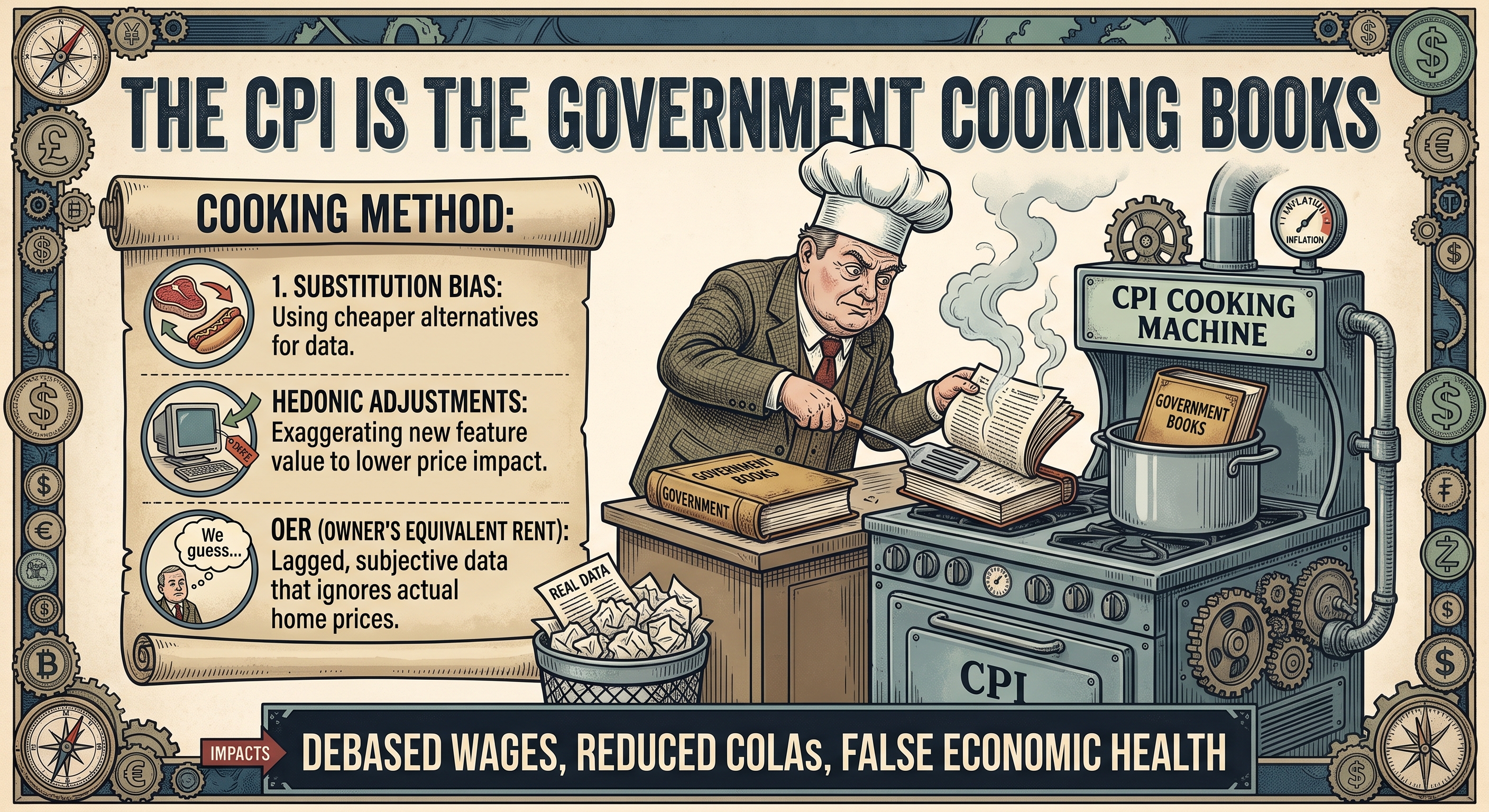
Why Official Inflation Feels Wrong: What the CPI Actually Measures
The gap between reported inflation and what you feel is not imagination. CPI is a constructed model with specific assumptions, and every methodology revision since the 1980s pushed the number the same direction.
Ready to Discuss Your Needs?
Whether you're locally upgrading, relocating to the area, or expanding your business or investment portfolio, we're here to guide you with competence and precision.
Call or Text: 713-303-5039