The First Tuesday Foreclosure Auction in Montgomery County: How It Actually Works
Every first Tuesday, properties change hands at auction across all 254 Texas counties. How it works in Montgomery County, the two different auctions people confuse, and an honest look at whether you should bid.

On the first Tuesday of every month, properties change hands at auction in all 254 Texas counties simultaneously. It is one of the more unusual features of Texas property law, it is entirely public, and most people who have heard of it have no idea how it actually functions.
Here is how it works in Montgomery County, and an honest assessment of whether an ordinary investor should participate.
Why the first Tuesday
Texas Property Code Section 51.002 requires that foreclosure sales occur on the first Tuesday of each month, at the county courthouse in the county where the property sits, between 10:00 a.m. and 4:00 p.m. If the first Tuesday falls on January 1 or July 4, the sale moves accordingly.
The sale must begin at the time stated in the notice of sale, and no later than three hours after that time.
Texas is a non-judicial foreclosure state, which is the reason this is so fast. A lender does not have to sue to foreclose on a standard deed of trust. The timeline runs roughly 41 days at minimum: a Notice of Default with a 20-day cure period, then a Notice of Sale filed at least 21 days before the auction.
That speed is why Texas foreclosures move so much faster than in judicial states, and why an investor watching this market has to be prepared well in advance.
Two different auctions people confuse
This is the single most important distinction, and in Montgomery County they now happen in completely different places.
Trustee sales, also called mortgage foreclosures. These are the non-judicial foreclosures where a lender is foreclosing on a deed of trust. They are conducted by a trustee or substitute trustee, and they still take place live, at the courthouse, on the first Tuesday.
Tax foreclosure sales. These result from delinquent property taxes and involve a court judgment foreclosing the tax lien. In Montgomery County, these are handled by the County Constables, and since a Commissioners Court decision in July 2021, they are no longer conducted live. They run online through Real Auction at montgomery.texas.realforeclose.com.
So if you are researching this, be clear which one you are talking about. The process, the location, and the registration requirements are different.
What Montgomery County requires for tax sales
The online tax sale has a specific prerequisite that catches people.
Bidders must register through the Real Auction website, which also provides free bidder training. Separately, you need a Written Statement, also called a Bidder Certificate, from the Montgomery County Tax Assessor-Collector. This document certifies that you have no outstanding delinquent taxes owed on any property to any taxing entity in the county.
The request carries a $10 fee, takes roughly three to five business days to process, and the resulting certificate is valid for 90 days. It must be received by the Tax Office at least 24 hours before the sale you intend to participate in. The Tax Office is located at 400 N. San Jacinto in Conroe.
Miss that step and you cannot bid, regardless of how ready your money is.
Where the listings appear
Properties heading to auction are posted at the courthouse and published in the legal section of local newspapers, historically the Conroe Courier and the Montgomery County News in their Wednesday editions, depending on which law firm is handling the foreclosure.
Notices are also filed with the County Clerk. There is no single statewide website listing every Texas foreclosure sale, which is part of why this market rewards people who do the legwork.
What actually happens at the sale
Bidding on a trustee sale typically opens at the amount owed to the lender. If nobody bids above that, the lender takes the property back through what is called a credit bid, and the property becomes REO, bank-owned inventory.
Winning bidders need certified funds. This is not a situation where you arrange financing afterward.
The honest risks
Now the part that matters most, because this is a genuinely difficult way to buy property.
You buy sight unseen. You generally cannot inspect the interior. You are bidding on a house you have seen from the street, if that.
You take it with whatever survives. A foreclosure wipes out liens junior to the one being foreclosed, but senior liens survive. If a second-lien holder forecloses, the first mortgage is still there and it is now yours to deal with. Tax liens, some HOA liens, and certain other encumbrances can survive as well.
You may get no title insurance. This is the big one. On a normal purchase, title insurance protects you against defects in the chain of ownership. At auction, you often have none.
Occupancy is your problem. If someone is living in the property, evicting them is your responsibility, your timeline, and your cost.
No financing, no option period, no inspection. Everything that protects a normal buyer is absent.
Why most investors are better off with REO
Here is our honest read, and it is the reason we work the REO side rather than the courthouse steps.
An REO property gives you the same category of opportunity, a motivated institutional seller disposing of an asset, without the landmines. You can walk the property. You can inspect it. You close through a title company with title insurance. The lender has typically already cleared the liens and handled occupancy.
You give up some discount for that certainty. For nearly every investor who is not doing this full time with a dedicated title research operation, that is a trade worth making.
Auction buying rewards specialists with deep experience, capital, and the ability to absorb a bad outcome. It punishes everyone else, and it punishes them expensively.
Where we come in
We are RES.NET certified with an active Pro account, and we work directly with banks and servicers on the disposition side. That means we see bank-owned inventory early and understand how these institutional transactions actually run, from the bank addenda to the timelines that trip up agents who have not done it.
If you want distressed opportunity in Montgomery County without the exposure of a courthouse auction, that is the lane we can put you in. And if you are determined to bid at auction, at least go in understanding exactly what you are and are not buying.
We are a real estate team, not attorneys, and this is general information rather than legal advice. Verify all procedures with Montgomery County directly, since rules and platforms change.
Call or text 713-303-5039.
The Keegan Group | Montgomery County, Texas / Residential · Commercial · Land · Investment · Property Tax Consulting.
More in Investment

2026-09-25
Timber Valuation and Hunting Land in East Texas: The Tax Treatment Landowners Should Understand
On wooded East Texas acreage, timber valuation can turn a five-figure tax bill into something far smaller. How it works, the wildlife management alternative built for hunting land, and the rollback tax that blindsides buyers.

2026-09-25
Short-Term Rentals on Lake Conroe: The Rules, the Numbers, and the Real Risk
Montgomery County has no county-level STR ordinances, which makes Lake Conroe unusually owner-friendly. But the real risk is not the government. It is your HOA covenants, and most buyers never read them.
2026-09-25
The Texas Series LLC: The Asset Protection Structure Built for Landlords
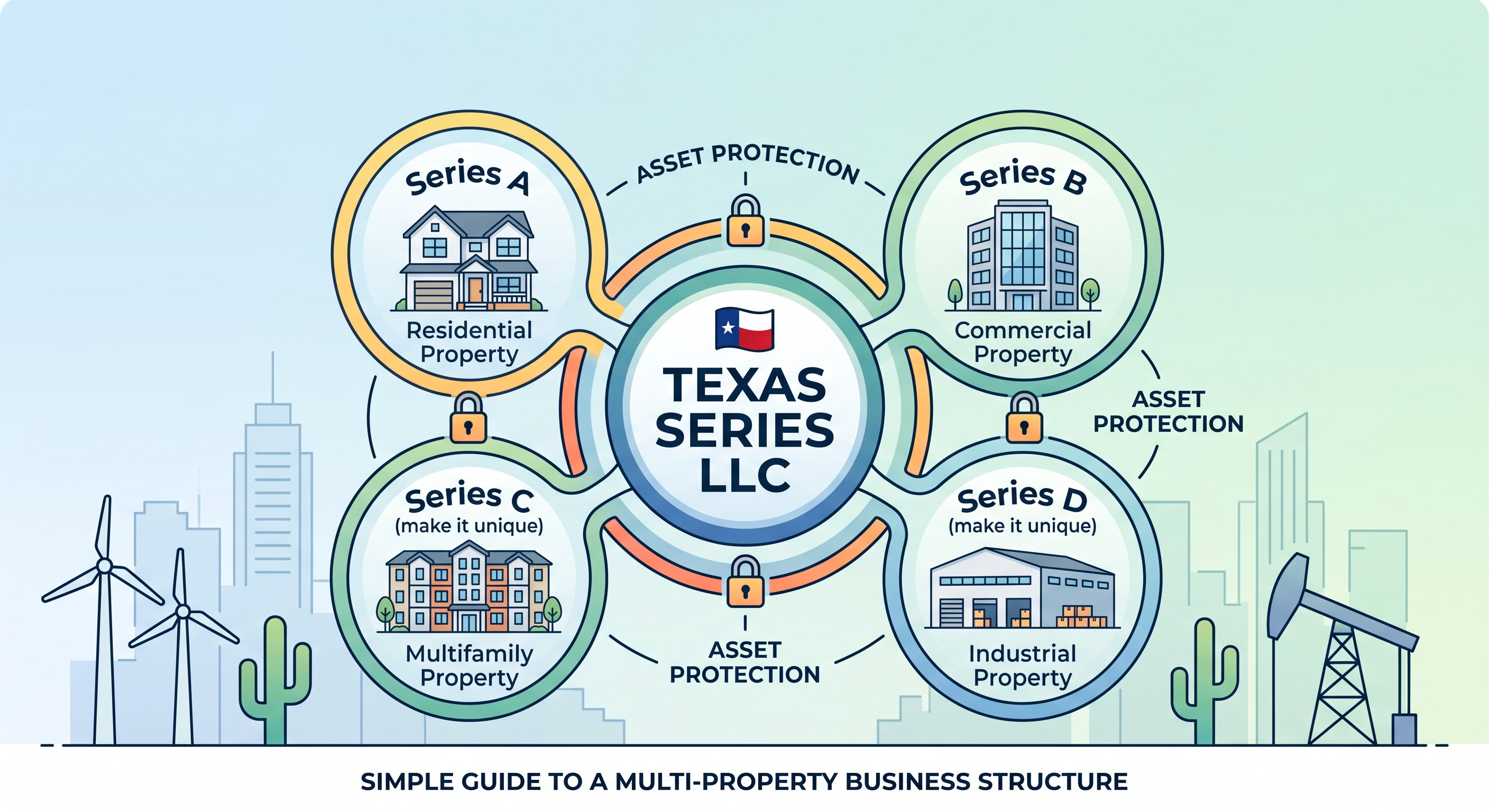
If a tenant sues over one property, can they reach the equity in your others? Texas offers a structure most states do not: the Series LLC. How it works, what it costs, and the recordkeeping discipline it demands.
Ready to Discuss Your Needs?
Whether you're locally upgrading, relocating to the area, or expanding your business or investment portfolio, we're here to guide you with competence and precision.
Call or Text: 713-303-5039