Short-Term Rentals on Lake Conroe: The Rules, the Numbers, and the Real Risk
Montgomery County has no county-level STR ordinances, which makes Lake Conroe unusually owner-friendly. But the real risk is not the government. It is your HOA covenants, and most buyers never read them.

Lake Conroe sits about an hour from one of the largest metropolitan areas in America, with 21,000 acres of water and a steady supply of Houstonians looking for a weekend. That combination has made it one of the more interesting short-term rental markets in Texas.
It is also one of the most permissive, which is both the opportunity and the trap. Here is the honest picture.
The regulatory environment is unusually light
Start with what does not exist.
Texas has no state-level permit requirement for short-term rentals. The state has largely left this to local governments.
Montgomery County does not currently have county-level short-term rental ordinances. That makes the unincorporated areas around Lake Conroe notably owner-friendly compared to much of the Houston region.
The City of Conroe does not appear to have adopted city-specific STR ordinances either, though anything inside a municipality's limits deserves a direct check with that city.
Compare that to Austin, Dallas, or San Antonio, where permits, registration fees, caps, and aggressive enforcement are the norm, and you can see why investors look north.
What you do owe: hotel occupancy tax
The tax piece is real and it applies regardless of permits.
Texas imposes a state Hotel Occupancy Tax of 6 percent on stays under 30 days. Some local jurisdictions add their own lodging tax on top.
As of April 1, 2025, platforms like Airbnb and VRBO are required to collect and remit the state HOT on behalf of hosts for bookings made through them. That removed a significant compliance burden for most operators.
But direct bookings are different. If a guest pays you directly rather than through a platform, collecting and remitting is your responsibility. Register with the Texas Comptroller and handle it properly, because this is exactly the kind of thing that surfaces later at an unpleasant moment.
The real risk is not the government. It is your HOA.
Here is the part that actually kills Lake Conroe STR plans, and it has nothing to do with city hall.
Many of the best waterfront communities on Lake Conroe are governed by deed restrictions and HOA covenants, and those private rules are enforceable. Bentwater, Walden, April Sound, Point Aquarius, and others each have their own governing documents, and they are not uniform.
Some restrict rentals to minimum terms. Some require HOA approval or registration. Some have amended their documents specifically to address short-term rentals as the market grew.
The legal landscape here has been genuinely litigated in Texas, and the outcomes have turned closely on the exact wording of the covenants at issue. Courts have looked hard at whether general residential-use language actually prohibits short-term rentals, and the answers have not been uniform. Many associations responded by amending their documents to say explicitly what they mean.
The practical takeaway is simple and non-negotiable: read the actual covenants for the actual property before you buy. Not the community's reputation. Not what a neighbor told you. The recorded documents, including any amendments.
A waterfront home that cannot legally be rented short-term is a very different investment than one that can, and the price rarely reflects that difference until you have already closed.
The dock question
One more Lake Conroe specific. The San Jacinto River Authority's Lake Conroe Division regulates and licenses activity on the lake, including residential docks, boat slips, bulkheads, and commercial operations.
If your STR strategy depends on the dock, which for most waterfront properties it does, confirm that the dock is properly permitted and that your intended use does not cross into something the SJRA would treat as a commercial operation requiring different licensing.
What actually performs
The market has clear preferences.
Waterfront homes with private docks are the top performers, for obvious reasons. Direct water access is the product people are buying. Homes with pools, particularly within walking distance of the lake, follow.
Demand is seasonal and weekend-weighted. Summer is strong, holidays are strong, and midweek in February is not. Any pro forma built on uniform year-round occupancy is fiction.
Running the numbers honestly
A short-term rental is an operating business, not a passive rental, and the cost structure reflects that.
Beyond the mortgage, taxes, and insurance, budget for cleaning between every stay, higher utility costs, furnishings and their replacement, platform fees, supplies, maintenance driven by heavier wear, and either management fees or a real time commitment from you.
Insurance deserves particular attention. A standard homeowners policy generally does not cover commercial short-term rental activity. You need a policy written for it.
And the honest comparison: a property that cash flows beautifully as an STR may barely work as a long-term rental. If regulations change, if the HOA amends its covenants, or if the market softens, you want to know whether the property still works on the fallback plan. Underwrite both.
How this fits with financing
Worth knowing that DSCR lenders vary considerably in how they treat short-term rental income. Some will underwrite based on STR projections. Many prefer long-term market rent from an appraiser's rent schedule, which can produce a very different coverage ratio than your Airbnb pro forma.
Sort that out with your lender before you structure the deal around STR income.
Where we come in
Lake Conroe is core territory for us. We know the communities dock by dock, and the questions that determine whether an STR strategy works are exactly the ones we ask before you write an offer: what the covenants actually say, whether the dock is permitted, how the specific community treats rentals, and whether the property still pencils if you had to convert it to a long-term hold.
We are a real estate team, not attorneys or tax advisors, so confirm legal and tax specifics with the appropriate professional. What we bring is the property side, and on Lake Conroe the property side is where these deals are won or lost.
Call or text 713-303-5039.
The Keegan Group | Montgomery County, Texas / Residential · Commercial · Land · Investment · Property Tax Consulting.
More in Investment

2026-09-25
The First Tuesday Foreclosure Auction in Montgomery County: How It Actually Works
Every first Tuesday, properties change hands at auction across all 254 Texas counties. How it works in Montgomery County, the two different auctions people confuse, and an honest look at whether you should bid.
2026-09-25
Timber Valuation and Hunting Land in East Texas: The Tax Treatment Landowners Should Understand
On wooded East Texas acreage, timber valuation can turn a five-figure tax bill into something far smaller. How it works, the wildlife management alternative built for hunting land, and the rollback tax that blindsides buyers.
2026-09-25
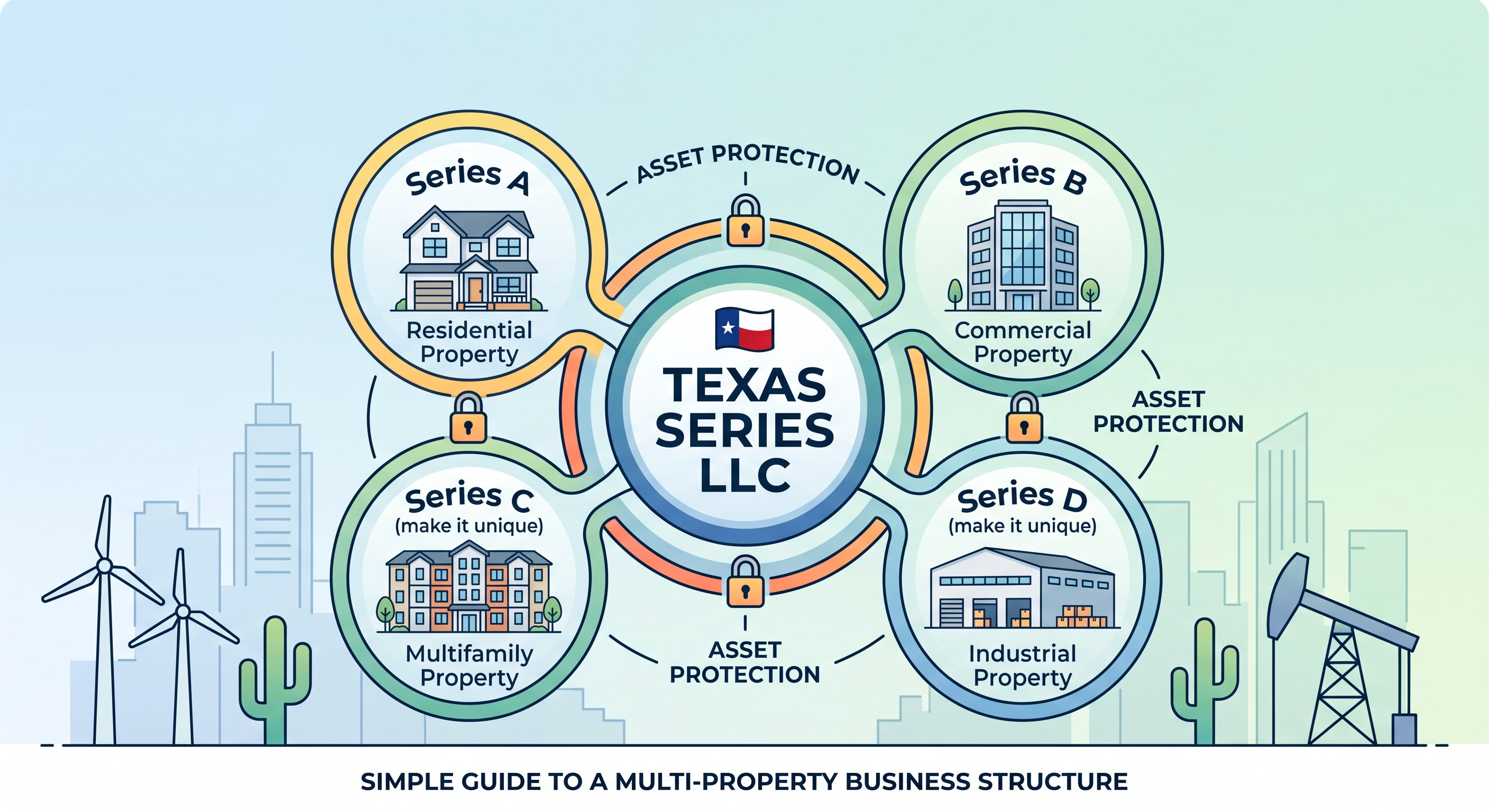
The Texas Series LLC: The Asset Protection Structure Built for Landlords
If a tenant sues over one property, can they reach the equity in your others? Texas offers a structure most states do not: the Series LLC. How it works, what it costs, and the recordkeeping discipline it demands.
Ready to Discuss Your Needs?
Whether you're locally upgrading, relocating to the area, or expanding your business or investment portfolio, we're here to guide you with competence and precision.
Call or Text: 713-303-5039