REO Investing: The Pitfalls Most Investors Hit, and How We Work the Other Side of It
We list bank-owned properties for banks and servicers, but not to collect listings. Being inside the disposition process is how we put investors in front of REO early. The five pitfalls, and the opportunity done right.
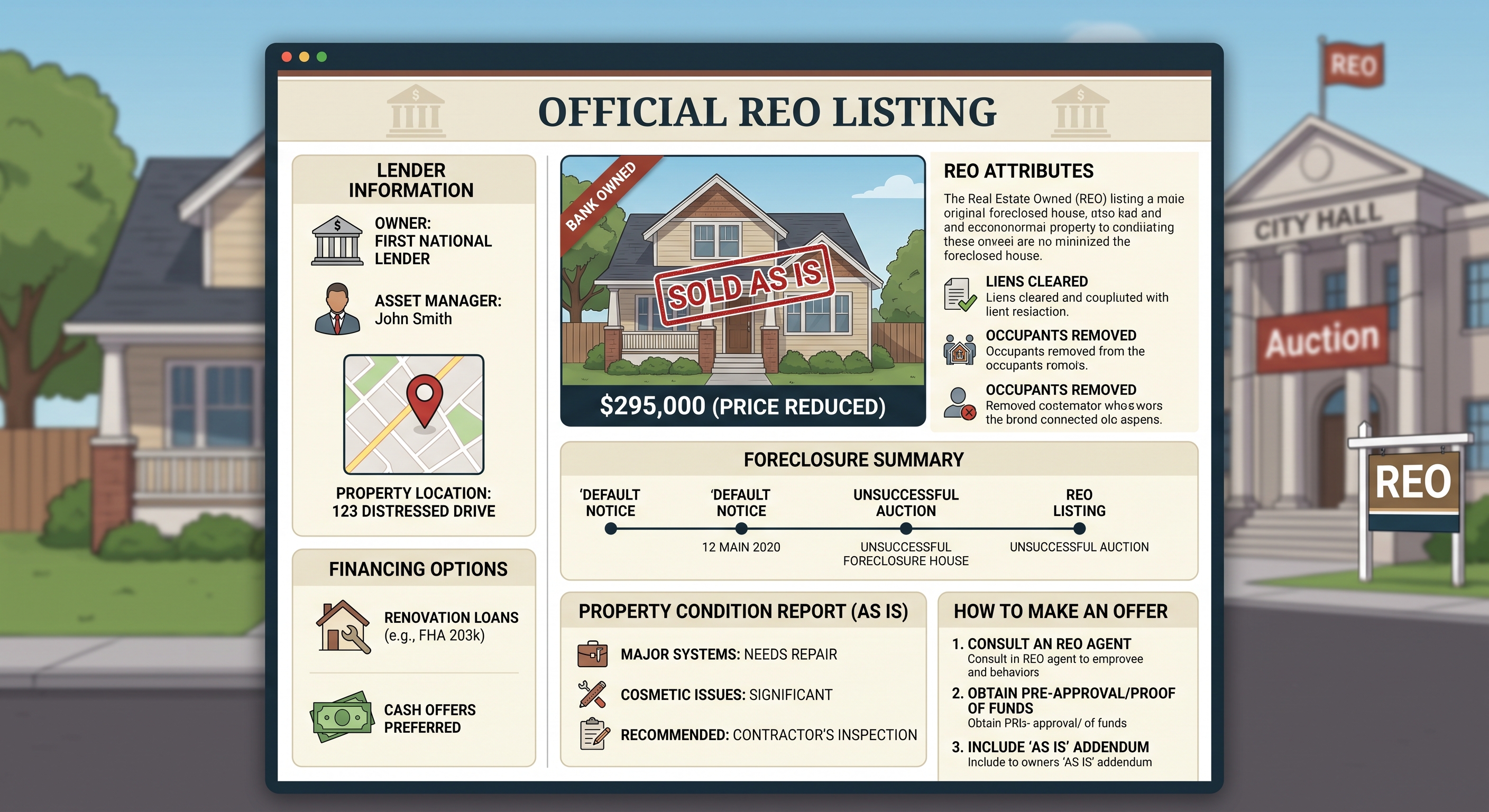
We work REO. We hold relationships directly with banks and servicers and we list bank-owned properties for them. But here is the part that surprises people: we did not build that side of the business to collect listings. We built it because being inside the disposition process is the only reliable way to put investors in front of this inventory early, and helping investors build portfolios is the actual objective.
That vantage point means we have watched a lot of investors get hurt on REO deals. Here is what goes wrong, and what the opportunity looks like when it is done right.
Pitfall one: assuming the discount is automatic
New REO buyers often believe bank-owned means cheap by definition. It does not. Banks price to market, and they run broker price opinions to establish value. In a competitive market a well-located REO can draw multiple offers and sell at or above list.
The discount, when it exists, comes from condition and from the seller's motivation to move an asset off the books. It is not a category-wide markdown. Underwrite every deal as if you were buying from anyone else, because the number has to work regardless of who is selling.
Pitfall two: underestimating condition
This is the one that empties bank accounts. REO properties are sold as is, and the bank almost never provides a seller's disclosure, because it never lived there and genuinely does not know the history.
That means you are buying an unknown. Vacant properties deteriorate. Systems sit unused. Winterization gets skipped or done badly. Water damage hides. And in our region, foundations move in clay soil while nobody is watching for it.
Investors who skip a real inspection to move fast are the ones who discover a failed sewer line or a foundation problem after closing. Your inspection period is not a formality on these deals. It is the whole defense.
Pitfall three: not reading the bank addendum
Every REO transaction comes with the bank's own addendum, and it typically overrides the standard contract terms buyers expect. Deadlines run differently. Per-diem penalties for delayed closing are common. Remedies are limited. Response times can be slow on the bank's side and rigid on yours.
Agents who have not handled these transactions read the standard contract and miss what the addendum actually did to it. That is where deals die, and it is a process failure rather than a price failure.
Pitfall four: title and occupancy surprises
Most REO comes with liens cleared and occupants removed, which is exactly why REO beats a courthouse auction. But most is not all. Unpaid HOA dues, code violations, municipal liens, and occasionally an occupant still in place can survive to your closing.
Order the title work early and read the commitment rather than skimming it. On a property that went through foreclosure, the chain of title deserves genuine attention.
Pitfall five: renovation math built on hope
Flippers get hurt on the rehab number more than any other line. Contractor estimates come in low, scope expands once walls open, timelines slip, and carrying costs compound the whole time.
Build a real contingency. Get an actual walkthrough scope before your option period ends, not after. And know your after-repair value from real comparable sales rather than optimism, because the exit price is what everything else depends on.
The opportunity, done right
Now the other side, because the pitfalls are manageable and the opportunity is real.
For fix and flip, REO offers something the general market does not: properties priced to reflect genuine condition, sold by an institution motivated to close. Across Conroe, Willis, Magnolia, and the older pockets of the county, there is durable demand for updated homes at accessible price points, which is exactly what a well-run flip delivers.
For buy and hold, REO and DSCR financing fit together perfectly. A DSCR loan qualifies the property on whether rent covers the payment. Buy below market and your basis is lower, which means a smaller payment against the same market rent, which means a stronger coverage ratio. The discount is what makes the loan math work. And because each property qualifies on its own cash flow, one good acquisition makes the next one easier rather than harder.
Run the BRRRR sequence on top of that and you have a repeatable engine: buy the REO below market, renovate to force value, place a tenant, refinance on the higher appraised value, and recycle your capital into the next deal.
Why our position matters to you
REO inventory does not surface like ordinary listings. It moves through asset managers on institutional platforms, on their timelines and their paperwork. We are RES.NET certified and we maintain an active Pro account, and we work directly with banks and servicers on the disposition side.
We are candid about why. Listing bank-owned properties is not the goal in itself. Being inside that process is how we see inventory early, understand how each asset manager operates, and know which properties are genuinely worth an investor's attention before they hit the broader market. The objective is building portfolios for our investor clients.
Which also means we will tell you when a deal does not work. A property that does not pencil is not a deal, and we would rather kill a bad one than earn a commission on it. Before real estate, we built a company that negotiated with Fortune 500 clients like Huntsman, Owens Corning, and Baker Hughes, and institutional counterparties are familiar ground for us.
If you are building a rental portfolio or running flips in Montgomery County, let us put you in front of the right inventory with honest numbers.
Call or text 713-303-5039.
The Keegan Group | Montgomery County, Texas / Residential · Commercial · Land · Investment · Property Tax Consulting.
More in Investment

2026-09-29
Cash or Leverage in Rental Investing: The Sliding Scale Between Cashflow and Appreciation
Five leveraged properties often produce less spendable income than one owned free and clear. Cash and leverage are not two options, they are endpoints of a scale, and the middle is where a lot of good outcomes get built.
2026-09-25
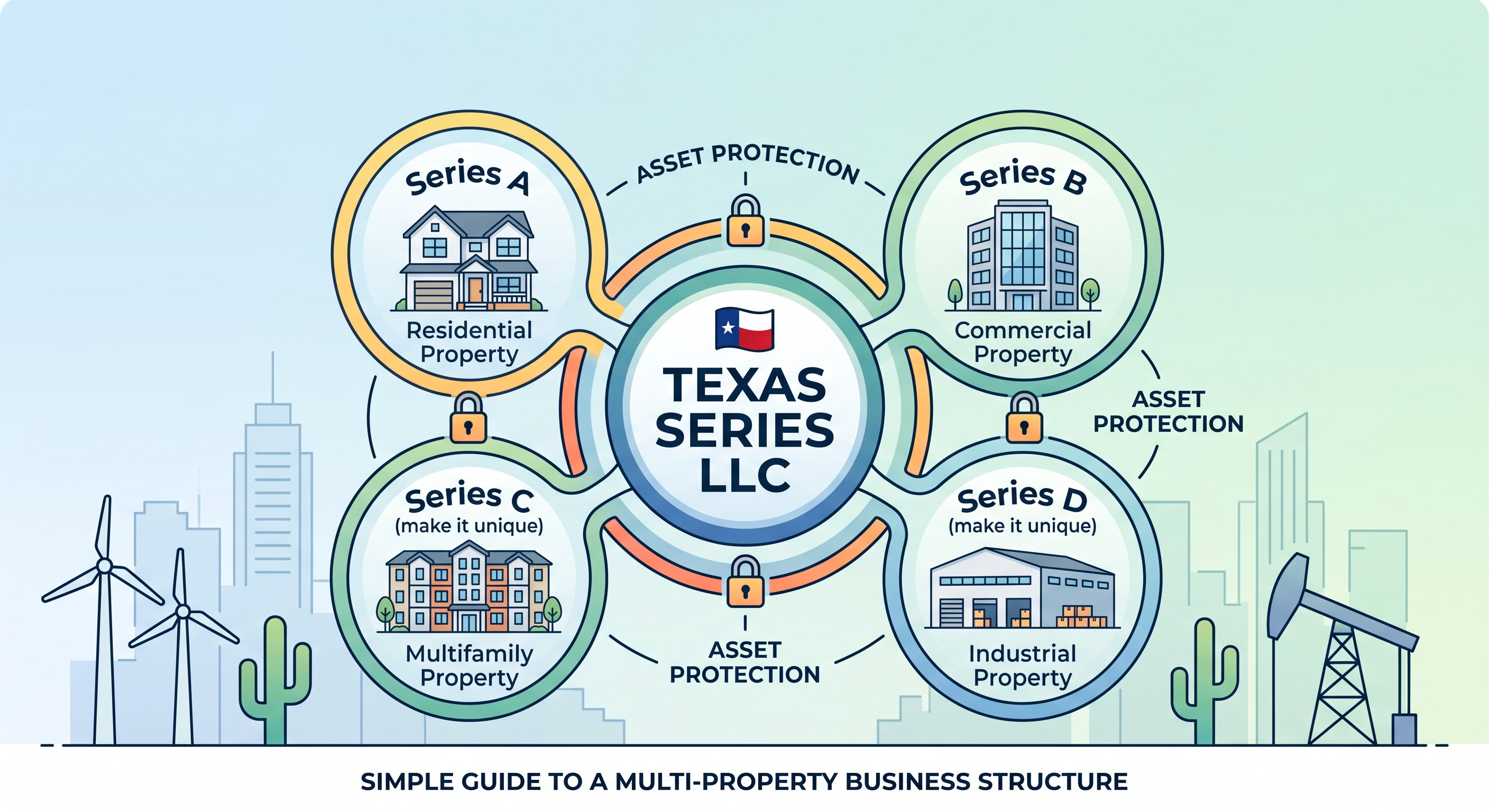
The Texas Series LLC: The Asset Protection Structure Built for Landlords
If a tenant sues over one property, can they reach the equity in your others? Texas offers a structure most states do not: the Series LLC. How it works, what it costs, and the recordkeeping discipline it demands.

2026-09-25
Short-Term Rentals on Lake Conroe: The Rules, the Numbers, and the Real Risk
Montgomery County has no county-level STR ordinances, which makes Lake Conroe unusually owner-friendly. But the real risk is not the government. It is your HOA covenants, and most buyers never read them.
Ready to Discuss Your Needs?
Whether you're locally upgrading, relocating to the area, or expanding your business or investment portfolio, we're here to guide you with competence and precision.
Call or Text: 713-303-5039